How to Choose the Perfect Lash Glue for You!


Table of Contents
Choosing the Right Eyelash Adhesive for You
If you take a look at any lash supply website in the U.S., you're bound to encounter at least three different adhesives for eyelash extensions. But why such variety? The quest for the perfect lash glue is akin to Goldilocks' search for the porridge that was just right. It's all about finding the perfect match for your unique needs as a Lash Technician!
While we're all for taking recommendations from fellow Lash Artists about the adhesive that revolutionized their application process, it's crucial to remember that what works for one may not work for another.
To narrow down your choices, you need to consider the following:
- Humidity
- Temperature
- Application speed (how quickly you can attach an extension to a natural lash after dipping it in adhesive)
Why are these factors important? They're key to selecting the most suitable adhesive from the plethora available. Each lash adhesive aims to do the same job but has its own set of preferences, making the selection process a bit daunting if you're picking at random.

The Role of Humidity in Lash Adhesive Performance
To accurately gauge this, you'll need a hygrometer in your workspace. High humidity levels can cause your adhesive to dry quicker than its intended drying time, potentially leading to retention problems. This happens because the adhesive may cure before you've properly positioned it, preventing a strong bond from forming between the extension and the natural lash. On the flip side, low humidity can slow down the drying process, leading to extensions that shift out of place, reducing the overall fullness and neatness of the lash line. Additionally, slower drying times in low humidity can increase irritation for both you and your client and result in more lashes sticking together, requiring extra time to separate them at the end of the session.
Temperature's Impact on Lash Adhesive
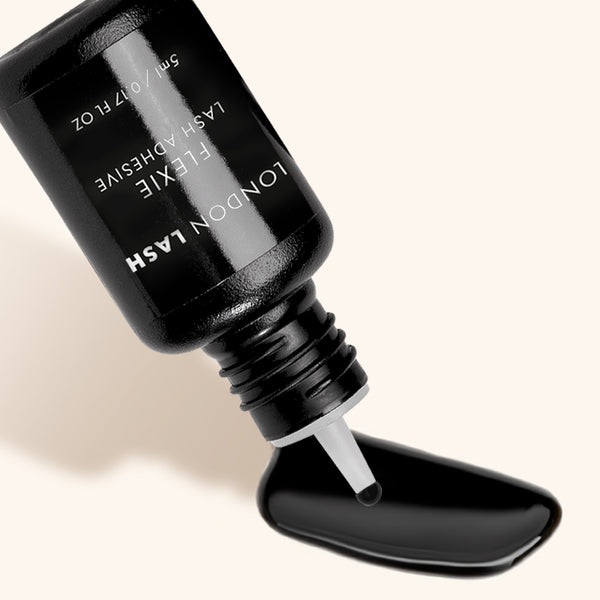
Temperature plays a significant role, even more so than humidity. High temperatures can speed up the drying process, while cooler temperatures tend to slow it down. Both extremes can cause the adhesive to thicken, so if you notice your adhesive's consistency has changed, temperature could be the culprit.
Your Lash Extension Application Speed
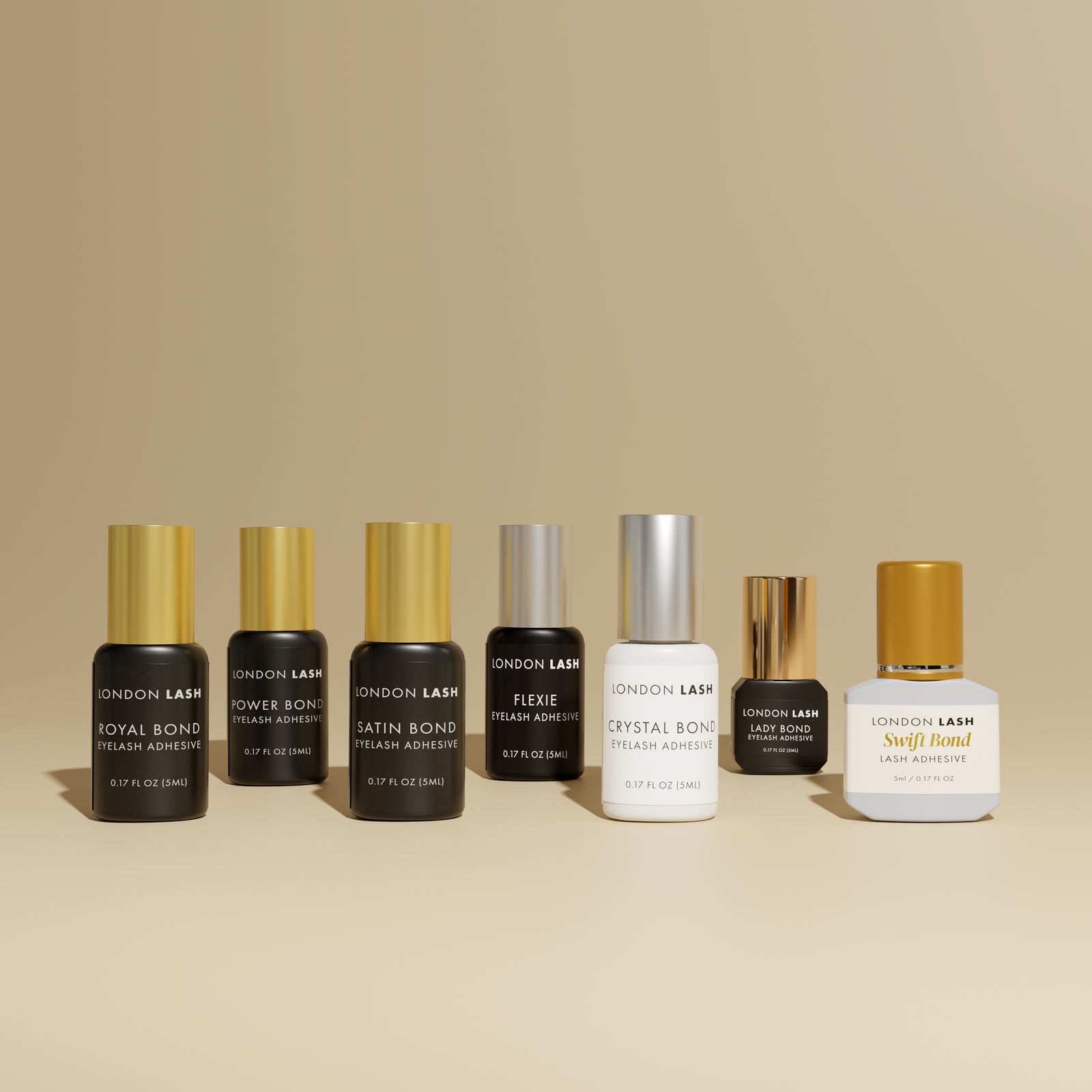
This factor is entirely up to you. Over time, you'll likely get faster at applying extensions. This is why those in the lash industry who have been doing lash extensions for 6 years, for example, might opt for an adhesive like Royal Bond, which dries in 0.5-1 second, as opposed to a more beginner-friendly option like Satin Bond, which has a 2-second drying time. While estimating your application speed is possible, timing is actually much more beneficial when choosing the right adhesive. Remember, "fast" is relative; what's fast for a seasoned professional may not be for someone newer to the field.
After considering these elements, take a look at our adhesive comparison chart to better understand which options might be the best fit for you!

London Lash Adhesives Selection Chart
| Glue Name | Drying Speed | Ideal Humidity | Ideal Temperature | Skill Level / Target Tech |
| Royal Bond | 0.5 – 1.0 second | 30% – 80% | 64°F – 72°F (18°C – 22°C) | Advanced Artists (1,000+ sets completed) |
| Power Bond | 0.5 – 1.0 second | 30% – 70% | 64°F – 72°F (18°C – 22°C) | Fast Volume Artists & High-Volume Salons |
| Flexie | 1.0 second | 30% – 70% | 64°F – 72°F (18°C – 22°C) | Advanced Techs in Fluctuating Room Climates |
| Satin Bond | 1.0 – 2.0 seconds | 45% – 65% | 64°F – 72°F (18°C – 22°C) | Intermediate Artists & Sensitive Eye Clients |
| Lady Bond | 2.0 seconds | 40% – 60% | 64°F – 72°F (18°C – 22°C) | Beginner Technicians & Training Academies |
| Crystal Bond | 1.0 – 2.0 seconds | 45% – 65% | 64°F – 72°F (18°C – 22°C) | Colored Lash Sets & Carbon Black Sensitivities |
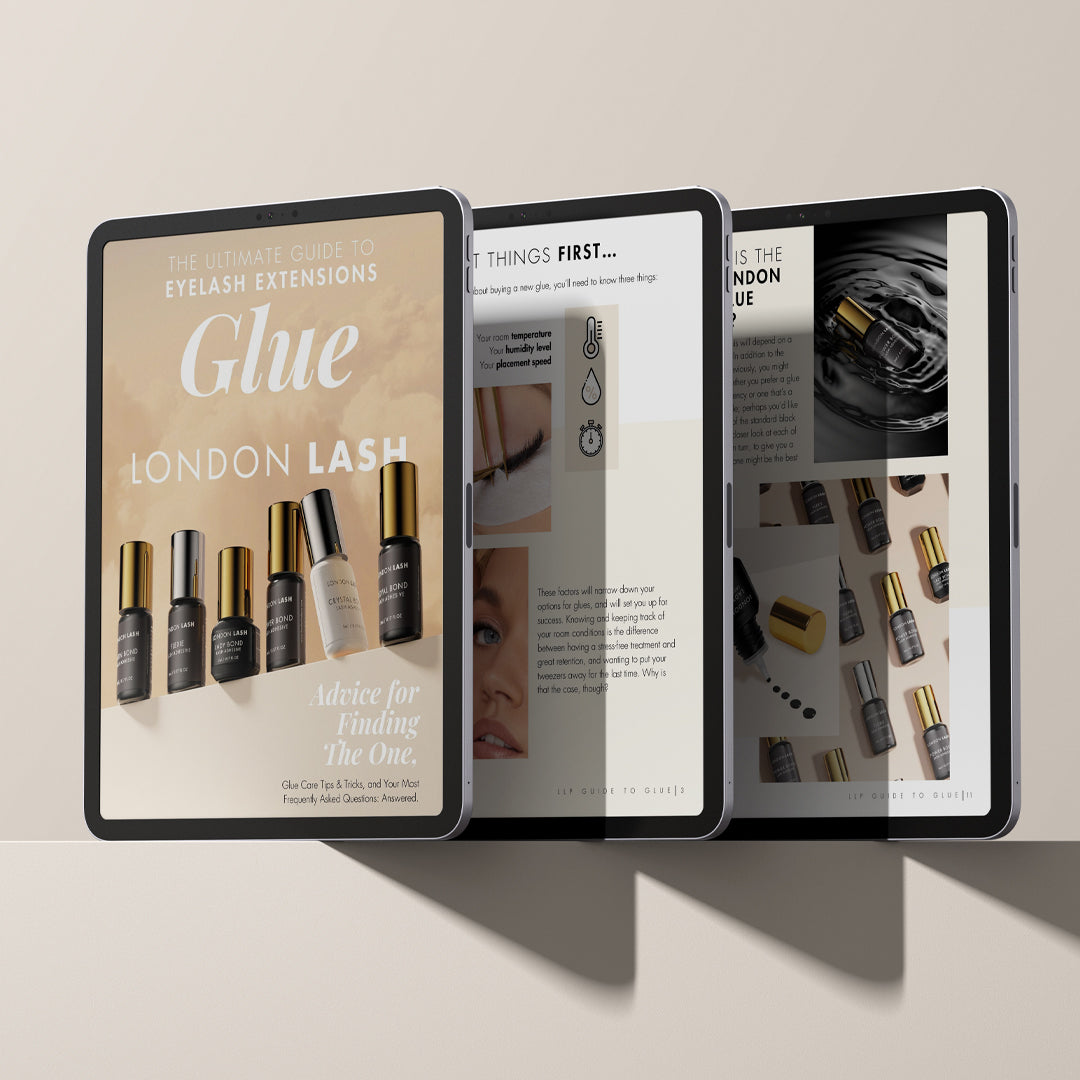
Still undecided or stuck between a few choices? Try a sample-sized bottle to test them out without the commitment of a full-sized purchase. We've also got a Glue Ebook which contains all you need to know about lash glue – it's definitely worth the read!
Frequently Asked Questions (FAQ)
What type of lash glue is best?
The "best" lash glue is one that dries at a speed matching your placement technique and studio environment. For advanced, fast-working technicians, rapid 0.5–1 second cyanoacrylate adhesives (like London Lash Power Bond or Royal Bond) are ideal. Beginners benefit from 1–2 second glues (like Satin Bond or Lady Bond) to allow time for precise isolation and alignment.
How do I know which lash style suits me?
Your ideal lash style depends on your eye shape, eyelid structure, and natural lash health. Round eyes suit Cat Eye or Squirrel maps to elongate the outer corners; hooded or monolid eyes benefit from M or L curls that sweep past the lid; deep-set eyes look best with Doll or Open Eye maps to bring eyes forward.
Is duo or kiss lash glue better?
DUO and KISS lash glues are consumer-grade adhesives designed strictly for temporary, daily strip lashes or DIY clusters. They contain latex or gentle acrylics soluble in water and must never be used for semi-permanent individual extensions. Professional lash technicians strictly use medical-grade ethyl-cyanoacrylate adhesives (like London Lash) for multi-week retention.
Is it better to get clear or black lash glue?
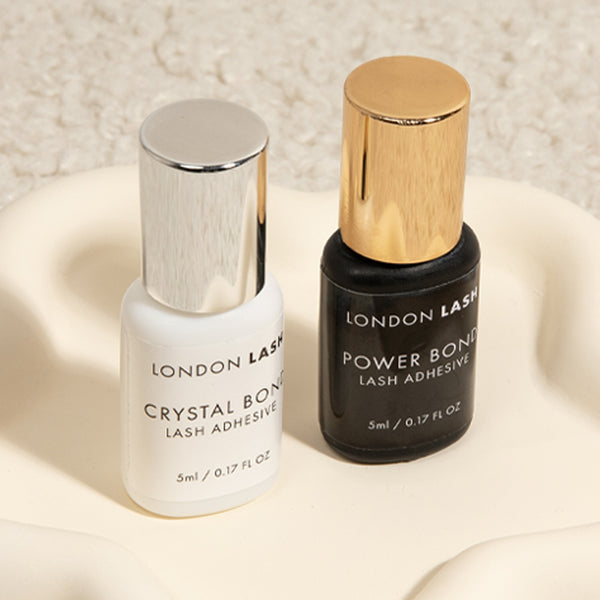
Black lash glue contains carbon black pigment, which creates a dark, defined eyeliner effect along the lash line—ideal for black extensions. Clear lash glue (like London Lash Crystal Bond) is pigment-free, making it the superior choice for brightly colored extensions, brown lashes, or clients with carbon black sensitivities.
Check out these featured products