How to Cope With A Hot Glue Summer!


Table of Contents
Lash Technicians: How to Work with Lash Glue in the Summer
Summer is around the corner once again. For Lash Techs, it's the time of year you want over before it even begins. Sure, for everyone else it's all fun, pool parties, sun tanning, but for those of us who work with glue day in day out, the rising temperatures make work difficult. Even the best of the best eyelash glue will be temperamental in the rising heat, but here are some pointers on how to tackle this issue.

A huge factor in how the glue will behave is of course your room conditions. If the humidity and temperature fluctuate, then the difference between a great eyelash set and a wonky eye will be very noticeable.
Temperature is the most important and noticeable factor. You're more likely to notice if the temperature changes, you are your own thermometer. It is more difficult to notice a change in humidity. If the temperature increases, we try to cool it down. Cooling down your workspace can also affect the humidity, so it is a fine balance. Opening a window may change both temperature and humidity, depending on the conditions outside. Air conditioning can reduce moisture in the air, which may slow your glue's drying time.

Lash Glue Conditions: What To Do If Your Humidity is Too Low?
In low humidity your glue will slow down and it will be problematic to work with. The adhesive will take longer to dry so you'll be holding the eyelash extension in place for longer. If you're using premade fans it may cause them to close and/or lean to one side. Neither is desired.
- Getting a humidifier will help in low humidity. Choose one suited to the size of your workspace and monitor the resulting humidity.
- Follow your adhesive’s recommended working conditions rather than adding water directly to the lashes or glue bonds.
- Use Primer as directed during pretreatment to reintroduce moisture after Cleanser.
- Apply Booster to the lash strip only, following the product instructions. Never apply it directly to natural lashes.
- When working with lash extensions or premade fans, check the product’s compatibility with Booster before use, as it speeds up adhesive curing.
Keeping track of the temperature and humidity around your workspace is easy. Add a Hygrometer to your collection and it's a done deal - you're set.
Remember, storing your glue in the recommended place is just as important, it will save you the product's shelf life and money in the long run.

What If Your Humidity is Too High? Best Eyelash Extension Glue for Humidity
In higher humidity your eyelash glue will dry much faster than usual. This can be detrimental to the retention of the lash set. Imagine you've finished the perfect eyelash extensions (or so you thought) only to check through your work at the end, you give the extensions a thorough examination and you notice most of them are falling off as soon as you touch them. That is because the lash glue dried quickly and never formed a bond between the extension and the natural lash.
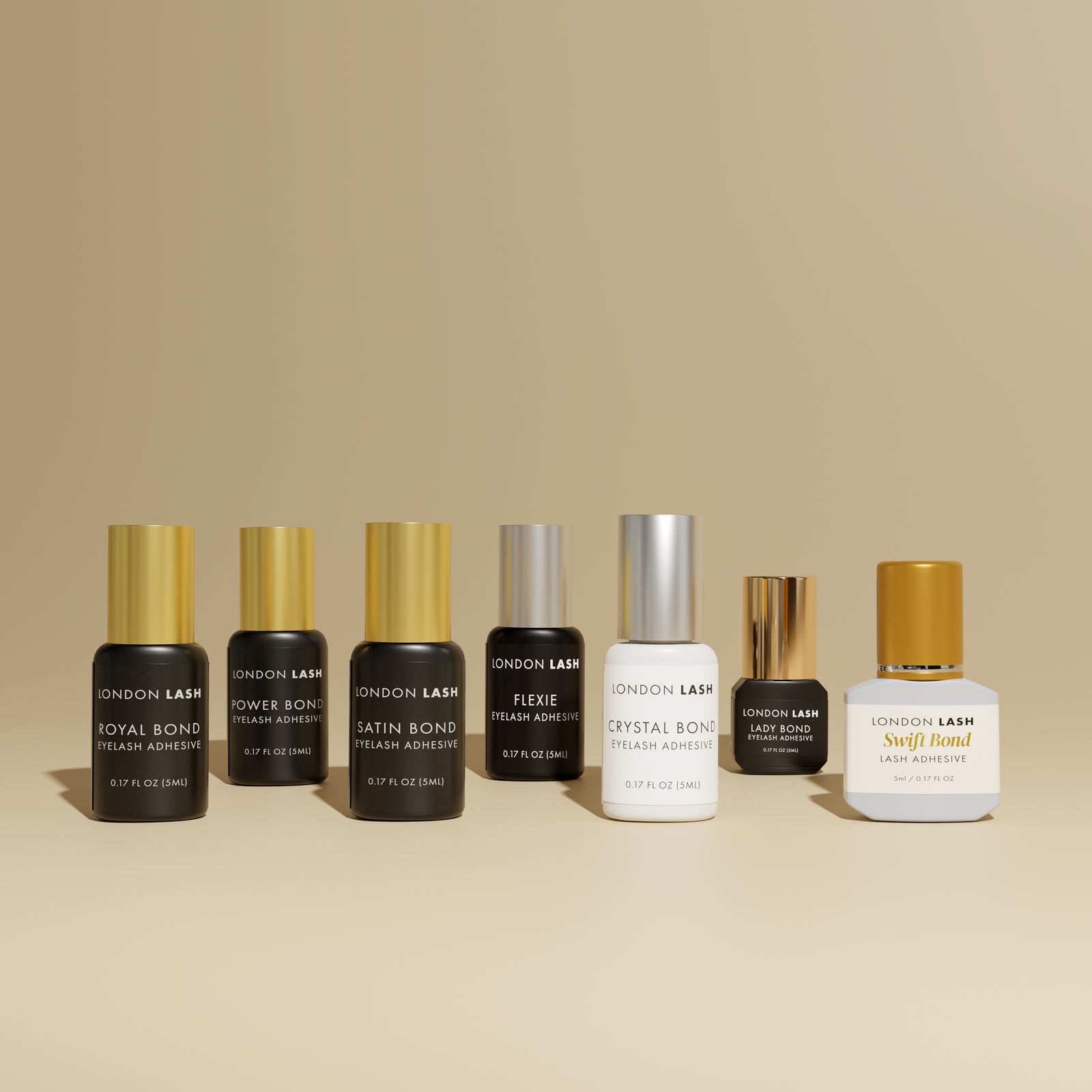
One thing to tackle this issue is getting a dehumidifier. Choose one with a capacity suited to your room. If managing humidity remains difficult, consider an adhesive with a slower drying time that is suitable for your conditions and application speed. Our London Lash Glue collection is vast so the Glue Chart below can help you find the right glue for you.

Comparison: Low Humidity vs. High Humidity Room Conditions
| Salon Climate Variable | Low Humidity (< 40%) | High Humidity (> 60%) |
|---|---|---|
| Adhesive Drying Behavior | May cure more slowly, depending on the adhesive’s working range | May cure more quickly, depending on the adhesive’s working range |
| Common Retention Failure | Extensions move or lean before the adhesive sets | Adhesive begins curing before a secure attachment forms |
| Recommended Action | Use a humidifier and follow the pretreatment instructions; apply Booster to the lash strip only if appropriate | Use a dehumidifier or switch to a suitable slower-curing glue |
| Glue Dot Longevity | May remain workable for longer; monitor its consistency | May thicken more quickly and need replacing more frequently |
Top Tip!
- Remember to change your glue dot regularly when dealing with temperature and humidity. Pay attention to your glue's behavior as it will also be affected on the dot, not just when applied to the individual lash extensions. If your lash glue turns stringy, it's time to dispense a new drop.
- Using Superbonder at the end of the treatment, following its application instructions, helps cure the adhesive while maintaining the flexibility of the bonds.
- And of course, once your client leaves the rest is in their hands. Advise your client to return for an infill around three weeks later, just in time to keep the lashes looking fresh for the rest of the season.
Frequently Asked Questions (FAQ)
How to deal with hot summer in a lash studio?
Monitor your studio's conditions using a digital hygrometer and follow the temperature and humidity ranges specified for your adhesive. Use air conditioning to manage heat and a dehumidifier if humidity exceeds your glue’s working range. If conditions remain difficult to control, choose an adhesive whose drying speed suits both the room and your placement technique.
Does heat affect lash extensions?
High temperatures can speed up adhesive curing during application, making it harder to form a secure attachment before the glue sets. Clients should also keep extensions away from direct sources of intense heat, such as ovens, hair dryers and BBQs, which can damage synthetic lash fibers. Regular cleansing helps remove sweat, oils and residue.
Check out these featured products